Why and how to choose your walking stick tips
Rubber tips for walking sticks ensuresafety, comfort and longevity. They improve grip on hard surfaces thanks to their soft material and spikes, reduce shocks and noise, while protecting the tip of the stick and the environment. Suitable for varied terrains, theypair with carbide tips on soft ground or with washers to prevent sinking in snow or mud. Easy to install and durable, their resistant materials extend their use. Essential for hiking, Nordic walking or trail running, they combine practicality, ecology and versatility depending on the activity and terrain.
Tired of slipping on trails or hearing the metallic noise of your sticks ? Walking stick tips are the essential solution for a peaceful hike. These durable rubber accessories provide optimal grip on all terrains, absorb shocks and extend the lifespan of your equipment. Discover our complete guide to choosing the right tips for your use, installing them easily and respecting the environment. Everything you need to know to turn every step into a smooth experience.
SUMMARY
- Why are tips essential for your walking sticks?
- The different types of tips: the right solution for every terrain
- How to choose the perfect tip for your practice? The ultimate guide
- Installation, maintenance and lifespan: our expert advice
- Tehnomat tips: the perfect synergy with your Funtastick poles
Why are tips essential for your walking poles?
More safety and better grip on all surfaces
With rubber tips, every step on asphalt or rocks becomes safer. Their 100% rubber structure offers optimal grip on hard terrains like dirt or mud. Unlike metal tips, these tips reduce the risk of slipping thanks to an abrasion-resistant material. Some models, like the Tehnomat, fit perfectly on bamboo poles Funtastick for maximum grip.
Optimised walking comfort and less noise
Rubber tips absorb shocks and vibrations, saving your arms and shoulders. Imagine a silent walk on tarmac: it's possible thanks to the soft material and rounded shape of these accessories. Their reduced weight (12 grams per unit) enhances practicality. Gone is the unpleasant metallic clatter, each step becomes lighter.
Protect your poles and preserve nature
A good tip not only improves your walk, it extends the life of your equipment and shows your respect for the paths you traverse.
In addition to safety, these accessories protect your poles by safeguarding the tungsten carbide tip. They limit wear on fragile paths, an ecological gesture against erosion on long-distance trails like the customs path. Developed after laboratory and field tests, they meet strict standards. Municipalities like Belle-Île-en-Mer or Perros-Guirec make themmandatory to preserve the pathsmost frequented.
The different types of tips: a solution for every terrain
Walking pole tips ensure comfort and safety by adapting to every type of terrain. They protect the poles and optimise their grip on hard, loose, or snowy ground. Choosing them well enhances the experience, whether hiking, Nordic walking, or on snow.
Rubber tips: versatility for everyday use
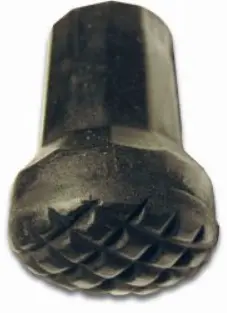
Rubber tips adapt to roads, stony paths, or hard terrains thanks to their versatility. Their 100% rubber material absorbs shocks and reduces noise, while protecting the pole tip and the environment. Bevelled models facilitate smooth movement in Nordic walking, while V-shaped patterns enhance grip on uneven surfaces. Lightweight (12g) and easy to replace, they are installed by applying slight pressure for optimal hold. A practical detail: their bright colour (like red) helps to spot them if they fall.
The tungsten carbide tip: the raw grip for loose terrains
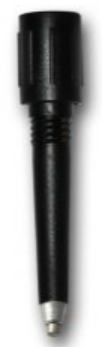
The carbide tip is designed for soft terrains such as earth, mud, or grass. Used without a rubber tip, its tungsten steel composition ensures effective penetration and abrasion resistance. It is ideal for forest trails or wet slopes,where stability is crucial. Remove the rubber tip before use for optimal grip. Enthusiasts of demanding hikes in rugged terrain appreciate it for its reliability over long distances.
Washers (or "baskets"): to prevent sinking
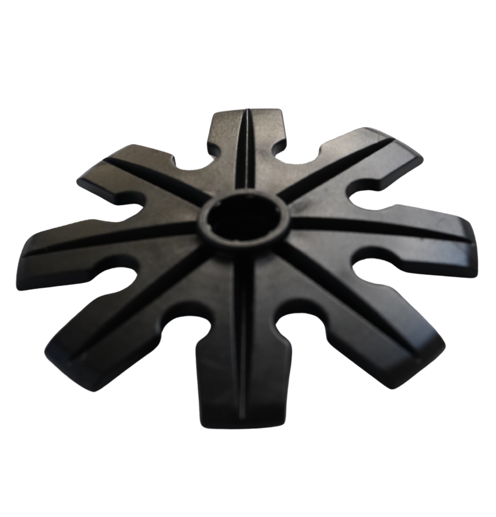
The washers, often confused with tips, prevent sinking thanks to an enlarged surface. The large models (up to 12 cm) are suitable for snow, while the small ones (5-8 cm) are for mud or sand. They are installed above the tip, in addition to the tips, for use on powdery snow or unstable terrains. On Funtastick bamboo poles, these accessories are interchangeable to adapt to changing conditions.
- Rubber tip: Ideal for hard surfaces (asphalt, rock). Cushions, grips, and is silent.
- Carbide tip (without tip): Perfect for soft terrains (earth, mud). Aggressive grip on technical courses.
- Washer ("basket") : Essential for snowy or loose soils. Available in varying diameters (50-120 mm).
How to choose the perfect tip for your practice? The ultimate guide
Why do some hikers miss out on the optimal experience with their poles? The answer lies in a crucial detail: the choice of tip. Suitable for your activity and the terrain, this small accessory improves your safety, preserves your poles, and optimises your comfort. Discover how Tehnomat tips, designed to fit perfectly with Funtastick bamboo poles, transform every outing into a success.
Analyse your main playground
Your route influences 90% of your decision. On asphalt, round rubber tips limit vibrations and protect your joints. In the forest, the tips provide impeccable grip on soft terrain. In the mountains, angled tips enhance stability on rocks. For mixed routes, opt for the versatility of an adaptable model. Each choice preserves your poles and maximises your safety.
Hiking, Nordic walking, trail running: specific needs
Hiking requires a balance between durability and grip on varied paths. Nordic walking on asphalt favours angled tips for effective propulsion. In trail running, the lightness of carbide tips compensates for their robustness on rough terrain. Tehnomat models, tested in the lab and in the field,meet these requirements. Their ergonomic design adjusts to your Funtastick poles, ensuring performance and longevity.
The comparison table for an informed choice
| Types | Terrains | Advantages | Ideal for… |
|---|---|---|---|
| Round rubber tip | Asphalt, hard paths, rocks | Cushioning, silence, tip protection | Versatile hiking, urban walking |
| Beveled rubber tip | Asphalt, hard paths | Optimises push, good grip | Nordic walking |
| Carbide tip (without tip) | Soil, mud, grass, forest trails | Maximum grip, safety on loose ground | Nature hiking, trail |
| Wide washer | Fresh snow | Prevents sinking | Winter hiking, snowshoes |
| Narrow washer | Mud, sand, scree | Stability, prevents the pole from getting stuck | Summer trekking, unstable terrain |
Tehnomat tips, compatible with your Funtastick poles, combine durable materials and ease of change. Why miss out? Discover the range and adapt each outing to your needs.
Installation, maintenance and lifespan: our expert advice
Walking pole tips are key elements for safety and grip on all terrains. The Tehnomat models combine durability and versatility. Their standard diameter of 8 and 10 mm ensures compatibility with most products on the market.
How to change your tips effortlessly?
Replacing the tips is a quick and intuitive task. Follow these steps for a successful installation :
- Clean and dry the carbide tip thoroughly for a optimal grip.
- Position the tip straight on the point, ensuring the diameter alignment (11 mm standard).
- Push it in manually, then tap 2 to 3 times on the groundto secure it permanently.
For stubborn tips, use hot water to soften the rubber, then remove it by twisting while pulling. This method, inspired by Guidetti tutorials, preserves the integrity of the material.
Extending the life of your tips: the important actions
Regular maintenance doubles the life of Tehnomat tips. After a muddy outing, clean them with soapy water and a sponge, then air dry (never near a heat source). Store them out of sunlight and at temperatures above 25°C, ideally in a dry place (humidity below 70%). Avoid stacking them under pressure. Keep a spare set in your bag: a reflex adopted by 80% of hikers satisfied with WeddHuis tips.
When should you replace a walking stick tip?
Monitor the wear of the spikes: if they become smooth or punctured, replace the tip to avoid slipping. Tehnomat models include a visual wear indicator (spikes) to signal replacement. Their exclusive blend of synthetic rubber and steel withstands shocks and abrasion better than classic versions. A check before each outing ensures your safety and that of other hikers.
Checking the condition of your tips before each departure is a simple reflex that guarantees your safety and comfort throughout your journey.
Designed to last, Tehnomat tips are easy to install and adapt to all terrains. From asphalt to steep trails, their ergonomic design and compatibility with Funtastick poles make them a smart choice for lovers of demanding nature..
Tehnomat tips: the perfect synergy with your Funtastick poles
Perfect compatibility for Funtastick bamboo poles.
Tehnomat tips are designed to perfectly fit the shape of the Funtastick bamboo poles.No more worrying about a poor fit: their custom design ensures an optimal hold,, avoiding the risks of slipping or losing balance. Unlike generic models, these tips effortlessly adapt to your poles, providing valuable stability on rough terrains. A solution designed for demanding hikers. Their soft material also protects the tips of the poles, extending their lifespan even on the toughest surfaces.
Durable materials and ease of change.
Made with abrasion-resistant rubber, Tehnomat tips combine longevity and performance. Changing tips becomes child's play: a simple press is enough to install or remove them, thus adapting your poles for each outing. Whether for road walking or muddy terrain, this modularity allows you to customise your equipment in a few seconds. A time and safety gain for all uses. Their textured surface enhances grip, preventing unintentional slips during quick changes.
Technical specifications: weight, dimensions and certified quality
With a lightweight of 12 grams per tip, these accessories combine lightness and robustness. Their ergonomic shape optimises grip on hard floors or furniture. Their universal design adapts to standard poles. Subjected to laboratory and field tests, they benefit from collaborative development with experienced hikers, ensuring a reliability that stands the test of time. Their manufacturing incorporates an anti-wear process, tested under extreme conditions, for intensive use in all seasons.
The tips enhance safety and stability on all terrain, while preserving your poles. Choose a reliable piece of equipment, designed to last and adapt to your varied routes, with complete confidence.
FAQ
What type of tip should you choose for your walking poles?
Rubber tips are ideal for hard surfaces (asphalt, rock) due to their grip and shock-absorbing capacity. For soft terrains (earth, mud), prefer the bare tungsten carbide tip. Washers (or "baskets") complement these options: large for snow, small for sand or scree. Check the compatibility with your pole (tip diameter) and opt for abrasion-resistant rubber models for a long lifespan.
What are the washers for on trekking poles?
Washers, often confused with tips, increase the support surface to prevent the pole from sinking.They are essential in winter (large washers) for walking on fresh snow or in summer (small washers) on unstable terrain.such as mud or scree. They also prevent the pole from getting stuck between rocks, reducing the risk of breakage.. To be used in addition to rubber tips, never as a replacement.
Is it more beneficial to use walking poles?
Yes! Poles distribute body weight, reducing the load on the knees and joints.They improve balance on rough terrain and activate the muscles of the arms and torso,strengthening posture.. Rubber tips add acoustic comfort (less noise on asphalt) and increased safety due to their grip. For seniors or long-distance hikers, this is a valuable asset.
How to replace the tips on your walking poles?
To remove a worn tip, twist it while pulling. If it is stuck, soak it in hot water to soften the rubber.. Pour l'installation, nettoyez la pointe en carbure, placez l'embout droit, enfoncez-le à la main puis tapez 2-3 fois au sol pour le fixer. Les modèles "Snap-Fix" s'adaptent à des diamètres précis (ex: 14 mm ou 16 mm). Vérifiez régulièrement l'usure des crampons : si ceux-ci sont lisses, changez l'embout.
Quels embouts recommander pour les seniors ?
Les seniors bénéficieront d'embouts en caoutchouc avec une grande surface d'appui (type biseauté) pour une stabilité optimale. Les matériaux souples (caoutchouc 95% synthétique) réduisent les vibrations dans les bras, idéal pour les articulations sensibles. Des couleurs vives (rouge, jaune) facilitent leur repérage. Les modèles avec système "Snap-Fix" simplifient l'installation, tandis que les rondelles larges ajoutent une sécurité sur les terrains meubles.
Quelle pointe utiliser sur les bâtons de randonnée ?
La pointe en carbure de tungstène est la référence pour sa résistance extrême. Utilisez-la "à nu" sur les terrains souples (herbe, boue) pour une accroche maximale. Sur les sols durs, glissez un embout en caoutchouc par-dessus pour amortir et éviter l'usure prématurée de la pointe. Les pointes inclinées offrent une meilleure pénétration du terrain, tandis les pointes droites facilitent l'ajout d'embouts universels.
Pourquoi les bâtons de randonnée pourraient-ils être interdits ?
This idea mainly relates to specific regulations on certain fragile sites (historical trails, nature reserves) to limit environmental impact. However, rubber tipsprotect paths by preventing marks and damage. In the mountains,the washers also prevent digging into the ground. Adopting these responsible accessories prevents bans while respecting nature.
Do walking poles strengthen the arms?
Yes! Regular use of poles engages the muscles of the shoulders, triceps, and back, strengthening the power of pushes. The rubber tips optimise this effort by avoiding shocks that could limit training. In Nordic walking, angled models improve lateral push, engaging the pectorals and abdominals more. Suitable equipment (weight of tips, size of poles) maximises these benefits.
When to use boot tips on hiking poles?
The "boot" tips (or "integrated baskets") are designed for very soft terrain. Their flared shape and integrated mini-spikes prevent sinking into mud or sand. They are perfect forcrossing marshes, sandy paths, or snowy trails in winter. Pair them with lightweight poles (Tehnomat tips at 12g each) to maintain optimal manoeuvrability.